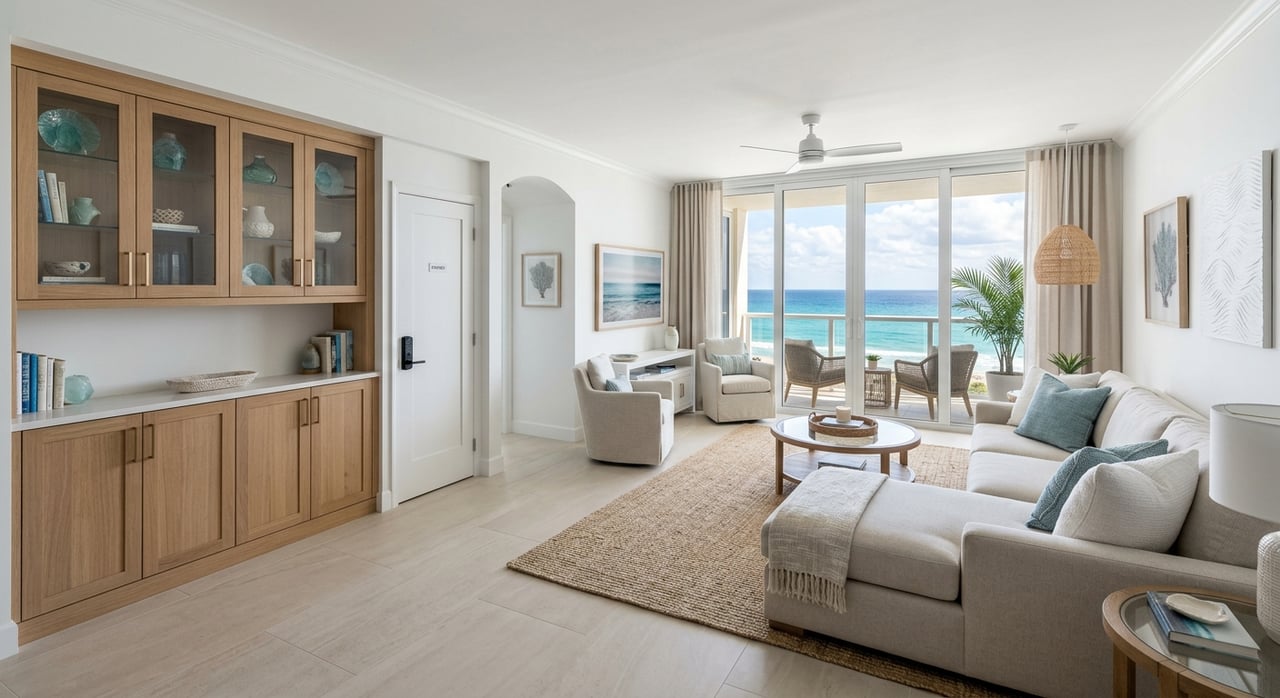
Wondering how to make your Hutchinson Island condo feel like your coastal escape while also keeping it ready for guests? That balancing act is one of the biggest challenges for second-home owners on the barrier island. With the right plan, you can create a space that is durable, easy to manage, and comfortable for both personal stays and short-term rentals. Let’s dive in.
Start With the Dual-Use Goal
A dual-use condo needs to work for two different kinds of living. First, it should feel relaxed and personal when you are in town. Second, it should be simple to clean, maintain, and reset if you rent it to guests.
On Hutchinson Island, that planning matters even more because of the coastal setting and Florida’s vacation-rental rules. If an entire condo unit is rented more than three times in a calendar year for stays of less than 30 days or 1 calendar month, or it is advertised as regularly rented to guests, Florida generally requires a Vacation Rental–Condominium license through DBPR.
Know the Local Rules Early
Before you choose furniture, start renovations, or plan a rental strategy, review the condo and local rules. This step can save you time, money, and frustration later.
Review condo documents first
For a condo purchase, ask for the current resale disclosure package as early as possible. Florida resale disclosure rules contemplate delivery of key records before a buyer signs, including the declaration, articles, bylaws, rules, and recent financial and budget materials.
These documents are especially important for a dual-use condo. You will want to confirm minimum rental periods, approval procedures, guest registration requirements, parking limits, pet rules, and any cap on rentals.
Understand how rental restrictions work
Florida law gives rental restrictions staying power in many condo communities. An amendment that prohibits rentals, changes rental terms, or limits the number of rentals during a set period applies to owners who consent and to owners who purchase after the amendment takes effect.
That means you should verify the current rules for the specific unit and building before you close. It is much easier to design your plans around known restrictions than to redesign later.
Check county tax and business requirements
In St. Lucie County, rentals of six months or less are subject to a 5% Tourist Development Tax in addition to Florida sales tax. The county also states that Airbnb and VRBO do not pay the county tax on the owner’s behalf.
Rentals over six months are exempt only when supported by a bona fide written lease. The county says tourist tax returns are due on the first of the month after collection and become delinquent after the 20th, so it helps to set up a compliance system early.
The county also requires businesses to obtain the correct local business tax receipt. If the condo is inside city limits, an extra city receipt may also be required.
Choose Materials for Coastal Durability
Salt air, humidity, and moisture can wear down a condo faster than many owners expect. A beautiful design on Hutchinson Island should not only look polished on day one. It should also hold up well over time.
Focus on low-maintenance finishes
A strong dual-use finish plan is usually a simple one. Hard-surface flooring, sealed bath and kitchen surfaces, wipeable fabrics, and easy-care cabinetry are practical choices in a coastal condo.
These materials also support faster turnovers between guest stays. Since DBPR requires provided linens to be clean, unworn, properly stored, and changed between guests or weekly, and dishes and glassware must be sanitized between guests unless the required notice is posted, easy-clean surfaces make day-to-day operations smoother.
Use corrosion-resistant hardware
FEMA’s coastal guidance explains that salt-laden air and moisture speed up corrosion. Its corrosion bulletin recommends stainless steel connectors in coastal applications, with Type 316 offering greater resistance than Type 304.
For condo interiors, that makes stainless hardware a smart long-term choice when replacing visible metal elements. Think cabinet pulls, shower hardware, closet rods, and bath accessories that can better handle constant coastal exposure.
Be careful with window and door upgrades
Windows and doors are among the most vulnerable parts of a home during hurricane conditions. Florida Disaster recommends reviewing debris-impact standards and opening protection with the local building code official before buying or installing impact glass, shutters, or other protection.
If you are renovating, bring that conversation in early. The right products and installation details matter in a barrier-island setting.
Build Storage Into the Design
Good storage is one of the most overlooked parts of a dual-use condo. It keeps the space feeling calm for you and functional for guests.
Add an owner lock-off
A lockable owner closet is not a legal requirement, but it is one of the most practical design choices you can make. It gives you a secure place for personal belongings, seasonal décor, backup supplies, and anything you do not want in guest circulation.
It also helps the condo feel less cluttered during guest stays. You can enjoy the unit as a second home, then tuck away personal items when it is time to reset the space.
Plan for turnover supplies
Frequent resets are part of running a short-term rental. A simple owner supply cabinet for extra towels, light bulbs, batteries, and cleaning backups can make those turnovers easier.
Extra linen storage is also worth planning for from the start. Because guest linens must be properly stored and refreshed, built-in organization can support cleaner, faster changeovers.
Create a better arrival zone
Guests and owners both benefit from a landing space near the entry. A bench, wall hooks, a small luggage-drop area, and labeled beach storage can help the condo feel organized right away.
These are not statutory requirements, but they support the clean-and-ready process expected in a vacation rental. They also make everyday island living more convenient.
Furnish for Comfort and Simplicity
The best dual-use condo interiors usually avoid overdesign. Instead of filling every corner, focus on pieces that are comfortable, durable, and easy to maintain.
Choose furnishings that can handle repeat use and quick cleaning. In a coastal setting, that often means fewer delicate textiles, less ornate detailing, and more pieces with durable finishes.
If you plan to host families and provide a crib, make sure it meets Consumer Product Safety Commission standards. Small choices like this help keep your condo both welcoming and compliant.
Think Beyond the Interior
A dual-use condo strategy is not only about furniture and finishes. It also includes building systems, inspections, and the right professionals.
Ask about building-specific requirements
If the building is three stories or more, DBPR says vacation-rental condominiums may need a balcony inspection certificate every three years unless the balconies and stairs are common elements. Certain buildings of three or more stories can also trigger automatic sprinkler requirements.
That is why it is smart to ask building-specific questions before you buy or launch rental use. Details at the building level can affect your timeline and costs.
Confirm permitting and local review
If the condo is in unincorporated St. Lucie County, the local business tax checklist requires zoning review before a receipt is issued. The checklist also notes that commercial locations need a fire inspection as part of the process.
If the condo is inside a city, a city receipt may also be required. For any improvement project, Florida Disaster recommends contacting the local building code official before starting work.
Build the Right Support Team
Even a beautifully designed condo can become stressful without the right help. A dual-use property works best when you have experienced professionals involved early.
Useful partners can include a condo attorney, CPA, insurance agent, coastal-experienced contractor, and property manager. Each one can help you evaluate different parts of ownership, from condo rules and taxes to material selection and rental operations.
That kind of planning is especially valuable on Hutchinson Island, where coastal wear, condo regulations, and guest-readiness all come into play. A well-coordinated team can help you create a condo that feels effortless, even though a lot of thought went into it.
Design for Durability First
If you are trying to balance personal enjoyment with rental income, the safest approach is simple. Design for guest-ready durability first, then layer in the personal touches you can lock away or store between visits.
That approach fits the maintenance realities of barrier-island living and supports Florida’s vacation-rental expectations. It can also protect your investment by making the condo easier to use, easier to manage, and easier to present when it is time to rent or sell.
If you are considering a Hutchinson Island condo for personal use, rental income, or both, Susie Wilson Real Estate, P.A. can help you evaluate the property, the condo rules, and the practical setup needed for turnkey coastal ownership.
FAQs
What makes a Hutchinson Island condo work well for dual use?
- A strong dual-use condo combines comfortable second-home living with easy guest turnover, durable coastal materials, organized storage, and a layout that supports both personal use and short-term rental operations.
When does a Florida condo need a vacation-rental license?
- Florida generally requires a Vacation Rental–Condominium license when the entire unit is rented more than three times in a calendar year for periods of less than 30 days or 1 calendar month, whichever is less, or when it is advertised as regularly rented to guests.
What taxes apply to short-term rentals in St. Lucie County?
- In St. Lucie County, rentals of six months or less are subject to a 5% Tourist Development Tax in addition to Florida sales tax, and the county says owners are responsible for the county tax even when using platforms like Airbnb or VRBO.
What condo documents should you review before buying on Hutchinson Island?
- You should review the declaration, articles, bylaws, current rules, and recent financial and budget materials, with close attention to rental terms, guest registration, parking, pet rules, and any rental caps.
What materials hold up best in a coastal condo?
- Practical options often include hard-surface flooring, sealed counters and bath surfaces, wipeable fabrics, and corrosion-resistant hardware such as stainless steel, which is better suited to salt-air exposure.
Why is an owner lock-off useful in a rental condo?
- An owner lock-off gives you a secure place to store personal items, seasonal décor, and extra supplies so the condo can stay guest-ready without losing its second-home function.