Thinking about a waterfront home on Vero Beach’s North Beach? You’re not alone. The barrier island stays in demand, yet early 2026 data shows more selection and longer marketing times in some segments, especially condos. In this guide, you’ll see where prices and inventory stand, how North Beach differs from nearby areas, the coastal factors that affect true cost, and a simple pre-offer checklist. Let’s dive in.
Where pricing and pace stand now
Public zip-level pages show 32963 remains a seven-figure market on median list price. Recent snapshots indicate a median listing price near $1,150,000, a median of about $532 per square foot, and roughly 85 to 89 days on market, with a sale-to-list ratio around 93 to 94 percent. Several public sources describe the zip as a buyer’s market in early 2026, meaning supply has grown relative to demand.
Expect differences across platforms and by product type. Condo-heavy months can pull reported medians down, while single-family waterfront closings often land higher and can shift short-term averages. For a specific property, you should rely on street-level comps and current MLS data rather than broad zip medians.
Condos vs houses: where leverage sits
Many island condominiums show higher inventory and slower velocity than single-family waterfront homes. That can give you more room to negotiate in certain buildings. Buildings with recent structural work, strong reserves, and updated systems still trade quickly at firmer prices. Prime oceanfront and deep-water single-family homes remain tighter on supply, and well-prepared listings get attention fast.
Dollar volume concentrates on the barrier island, and top sales frequently close in the multi-million range. Street, orientation (ocean vs river), lot depth, deeded access, dockage, and amenities can move value by large amounts. Expect bigger price dispersion and fewer direct comparables at the upper end.
Why North Beach stands out
Local groups frame North Beach as the northern stretch of the barrier island, running from the John’s Island area toward Beachland Boulevard and adjacent sectors just north of Ocean Drive. Always confirm whether a parcel sits in the City of Vero Beach, Indian River Shores, or the Town of Orchid since rules, taxes, and flood-related discounts can vary. You can review community context through the North Beach Civic Association.
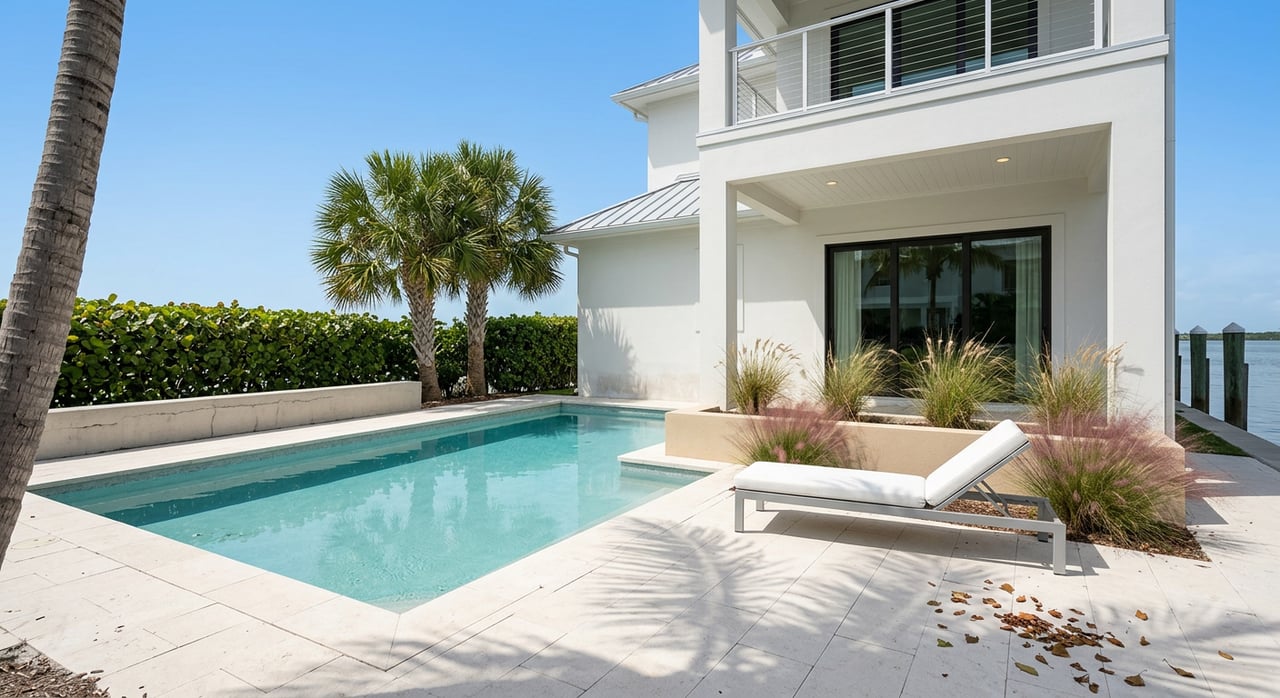
North Beach’s character leans private and low density, with quieter beach parks, oceanfront estates, and riverfront lots. County dune and shoreline projects often focus on parts of the north island, which can improve medium-term protection but may create short-term construction windows that affect beach access. The City of Vero Beach’s planning documents also underscore the island’s long-run luxury positioning and value concentration, which supports demand over time. Review background in this City of Vero Beach planning memorandum.
North vs Central vs South: quick compare
- North Beach: larger lots and privacy, with a patchwork of oceanfront and riverfront estates. Dune projects and beach maintenance work may occur on some reaches.
- Central Beach: denser, more walkable to Ocean Drive and Miracle Mile retail and dining, plus a larger share of mid-rise oceanfront condos and cottages. For a sense of central-area lifestyle context, see this Vero Beach community overview.
- South Beach / Orchid Island / John’s Island: planned club communities, amenity packages, and ultra-luxury segments that often out-perform local medians on a price-per-foot basis.
Your choice comes down to what you value most: walkability, privacy and lot size, or club amenities and curated lifestyle.
Coastal risk, insurance, and rules that matter
Flood zones and elevation
Flood-zone classification affects your insurance premium, lender requirements, and build standards. Pull the current FEMA Flood Insurance Rate Map panel for any home you consider and review the property’s elevation certificate. Start with the county’s FEMA notice and flood resources on FEMA’s map portal and the county’s flood guidance page.
Dune and beach projects
Indian River County has funded dune replenishment on the north island. These projects can reduce erosion risk over the medium term, but they also bring temporary construction impacts and timing windows. Track updates via local reporting, such as this North Island dune replenishment coverage.
Sea-level rise planning
Use NOAA’s Sea Level Rise Viewer to visualize potential future scenarios and high-tide exposure at the parcel level. Pair it with FEMA FIRMs and local elevation data before you price risk. Explore scenarios with the NOAA SLR Viewer.
Condo inspection and reserves
Florida’s post-Surfside framework (SB 4-D) requires milestone inspections for many condominium and cooperative buildings and strengthens reserve and disclosure requirements. Before you offer on a condo, confirm milestone inspection status, review recent reserve studies, and check meeting minutes for capital projects or special assessments. Read the bill details on the Florida Senate site for SB 4-D.
Assessed values and taxes
Island municipalities have posted strong assessed-value growth in recent years, which influences property taxes. Review parcel histories and taxable values through the Indian River County Property Appraiser, and track local reporting on valuation trends, such as this update on island property values.
Your pre-offer waterfront checklist
Use this list to move from browsing to offer-ready:
- Confirm the exact legal parcel, current FEMA FIRM panel, and elevation certificate. Note whether the home is in a Special Flood Hazard Area. Start with FEMA’s notice page and the county’s flood guidance.
- Document deeded beach access or easements and the location of public access points. Check neighborhood communications via the North Beach Civic Association.
- For riverfront homes, verify dock and slip depth at mean low water, riparian rights, and permit history. Ask for as-built elevations and materials for any seawall or bulkhead.
- If buying a condo, request the current budget and reserve study, the master insurance certificate, the last 12 to 24 months of minutes, litigation status, and milestone-inspection reports under SB 4-D.
- For gated and club communities, confirm amenity rights and any scheduled capital projects that could lead to assessments.
- Obtain written insurance quotes for wind and flood based on the latest elevation certificate, and review hurricane deductible structures.
- Pull micro-market comps for the last 6 to 12 months on the same street and orientation, adjusting for lot depth, private beach access, dockage, and condition.
- Check for near-term public projects that might affect access or shoreline work, such as beach renourishment, bridge maintenance, or A1A improvements. Follow local reporting like this dune project update.
- Review assessed-value history and tax trends through the county property appraiser.
Offer strategies by submarket
- North Beach: Reward lot depth, private beach frontage, and true deep-water access. Expect fewer direct comps and wider price dispersion. Confirm whether that beach reach has scheduled dune protection or replenishment via local notices and the North Beach Civic Association.
- Central Beach: Pricing reflects walkability and proximity to Ocean Drive and Miracle Mile. Condo comps are more plentiful but sensitive to building finances and reserves.
- South Beach / Orchid / John’s Island: Values reflect amenity capture and club lifestyle. Use closed sales within the same community rather than relying on zip-level medians.
Ready to explore North Beach?
If you want privacy, shoreline access, and a home that fits your lifestyle, a focused plan will help you buy with confidence. Start with flood and elevation facts, review building or seawall records, and price street-level comps carefully. When you are ready to compare options, lean on a local partner who knows the nuances of North Beach and the wider barrier island.
For tailored guidance and on-the-ground expertise, connect with Susie Wilson Real Estate, P.A.. We specialize in Vero Beach waterfront and island properties and can help you navigate due diligence, pricing, and negotiation with clarity.
FAQs
What is the current median listing price in 32963?
- Public snapshots place the median listing price near $1,150,000, with about 85 to 89 days on market and a sale-to-list ratio around 93 to 94 percent in early 2026.
How do flood zones affect costs for North Beach buyers?
- Flood-zone status influences insurance premiums, lender requirements, and build standards, so pull the current FEMA FIRM panel and the home’s elevation certificate before you offer.
What condo documents should I review before buying on North Beach?
- Request milestone-inspection reports under SB 4-D, reserve studies, recent budgets, the master insurance certificate, and 12 to 24 months of meeting minutes to identify capital projects or assessments.
How does North Beach differ from Central and South Beach areas?
- North Beach emphasizes privacy and larger lots, Central Beach offers higher walkability and more condos, and South/Orchid/John’s Island focuses on club amenities and ultra-luxury segments.
Will dune or beach renourishment impact my purchase timing?
- Yes, renourishment can add short-term construction windows that affect access, even as it lowers erosion risk over time; check current schedules and local reporting before you plan.
Are island property taxes changing in 32963?
- Recent reporting shows strong assessed-value growth on the island, so verify parcel histories and taxable values through the county property appraiser when modeling ownership costs.